
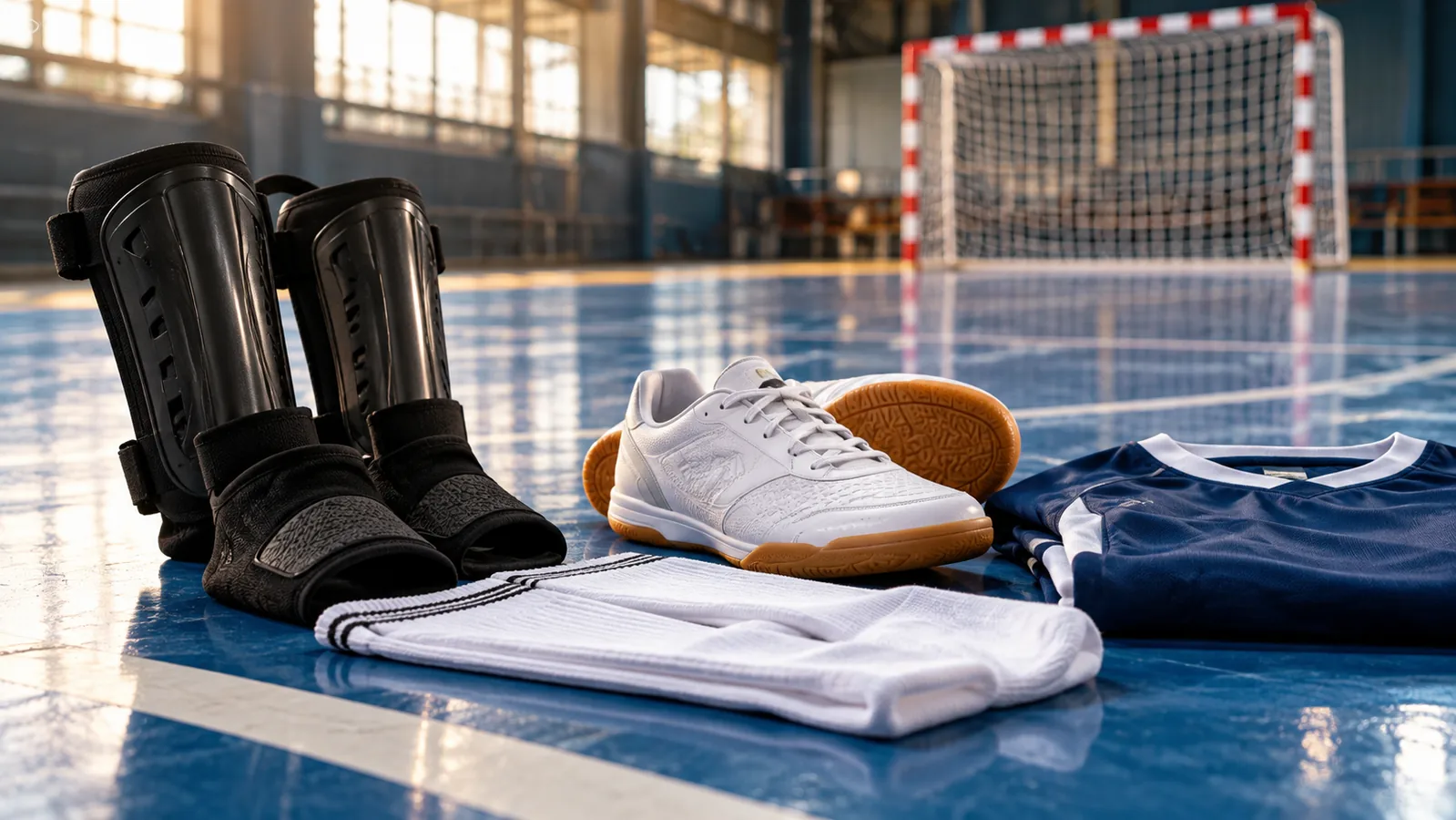
Shin guards are part of formal futsal's compulsory equipment. Under FIFA's 2025–26 Law 4, players wear shin guards made from suitable material and sized to offer reasonable protection, covered by socks. That rule is for the formal game; recreational organisers may set additional conditions but an informal session is not proof that protective equipment is unnecessary.
A buyer's fit check
- Choose protection sized to the wearer's shin rather than simply buying the smallest or cheapest shell.
- Fit it securely so it does not slide down as the player jogs or changes direction.
- Check that socks cover the shin guard and hold it in place without painful tightness.
- Make sure the edges do not dig into the ankle or knee during movement.
- Inspect cracked guards, damaged straps and loose sleeves before use.
Slip-in versus strapped styles
Slip-in guards under compression sleeves are often simpler and lower-profile. Guards with straps may be easier to secure for some users. Neither category is automatically safer than the other: protection depends on appropriate size, coverage, fit, and the material/design of the actual guard.
Buying for children
Have the child try their real sports socks with the guards. If the sock cannot comfortably cover the guard, change the setup rather than trimming the guard. Recheck after growth and wash socks and sleeves after exercise according to care labels.
A sensible starter purchase
Start with a comfortable pair that fits and works with the socks already owned. Matching designer socks, special sleeves and premium protective branding are optional unless the team requires a kit style. Ask the programme about colours and competition equipment requirements before buying duplicate pairs.
See the full beginner gear checklist and the kit planner for a no-invented-prices shopping plan.
Sources
Verified October 13, 2026 · Freshness: event-driven