
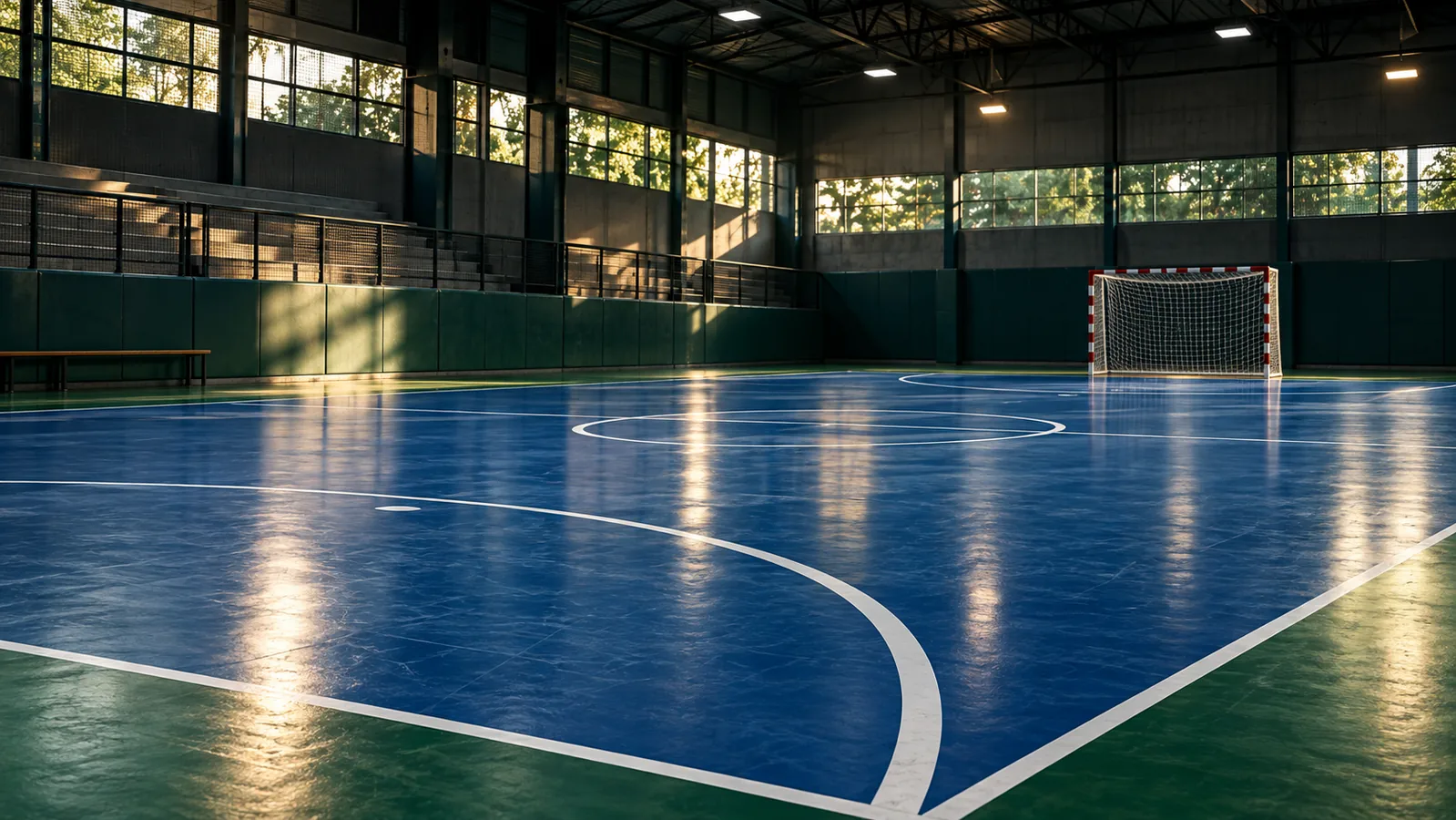
You do not need a large equipment list to try futsal. For most beginners, the biggest mistake is buying specialised gear before knowing the venue, surface and organiser requirements.
Player essentials
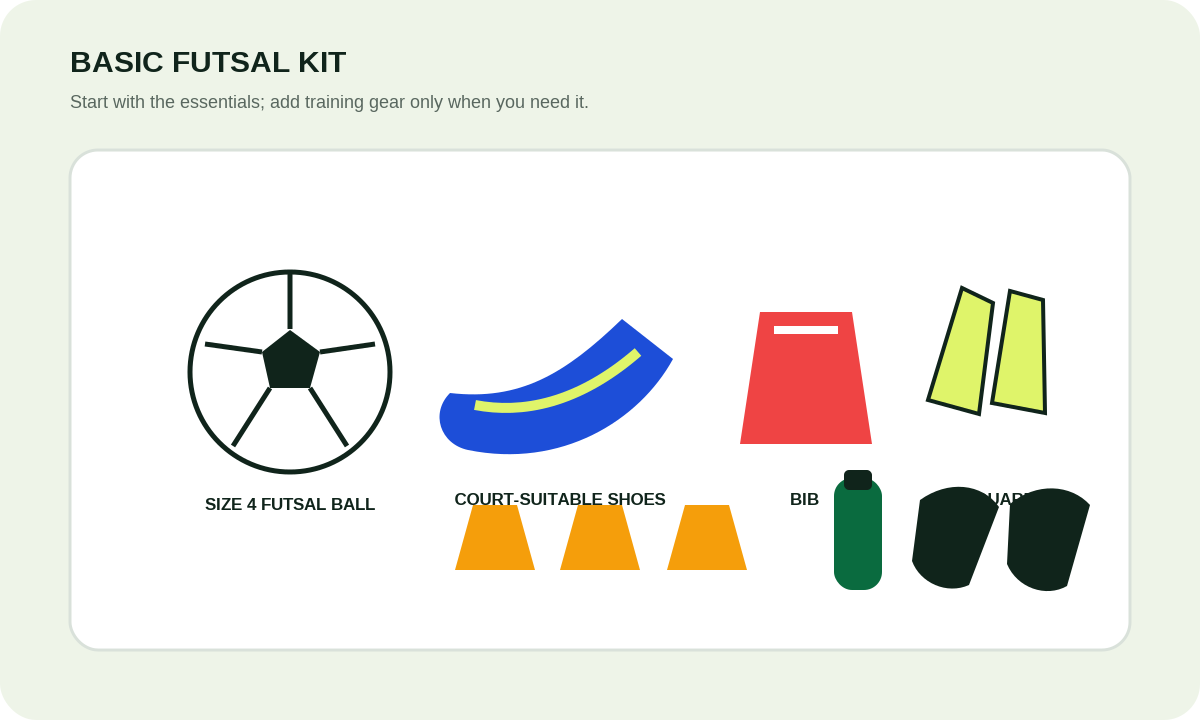
For a normal training or open-play session, the practical basics are:
- shoes appropriate to the surface;
- comfortable sports shirt and shorts;
- water;
- long socks and shin guards when required by the organiser/competition;
- a light/dark alternate shirt or bib if the organiser requests one.
The current FIFA laws govern formal player equipment, while recreational organisers may set additional venue-specific rules.
Futsal ball
Standard senior futsal uses a size 4 reduced-bounce ball, not the standard adult size 5 football. Many organised sessions already supply balls, so ask before buying one for a first visit.
See Futsal ball vs football ball for the size and behaviour differences.
Goalkeeper gear
Goalkeepers may choose:
- long pants or padded shorts;
- knee/elbow protection appropriate to the surface;
- finger tape or gloves according to personal preference;
- a distinct goalkeeper shirt as required by the competition.
Do not assume padded gear is mandatory. Court conditions, competition rules and personal technique vary.
Team-training equipment
A coach or regular group can add inexpensive equipment gradually:
- training bibs in contrasting colours;
- cones or flat markers;
- spare futsal balls;
- ball pump and pressure gauge;
- small tactical board;
- portable goals only when they can be safely stabilised.
A few cones and enough balls for repetitions usually improve a session more than a large catalogue of gadgets. For team purchasing decisions, see the school and club equipment checklist.
Buying order for a new player
- Venue first — confirm where you will actually play.
- Shoes second — match the outsole to the surface.
- Personal protection — follow organiser/competition rules.
- Ball only if needed — many programs provide them.
- Add training accessories only when you know how you will use them.
See Futsal shoes by surface and the Play Finder.
Sources
Verified October 4, 2026 · Freshness: event-driven