
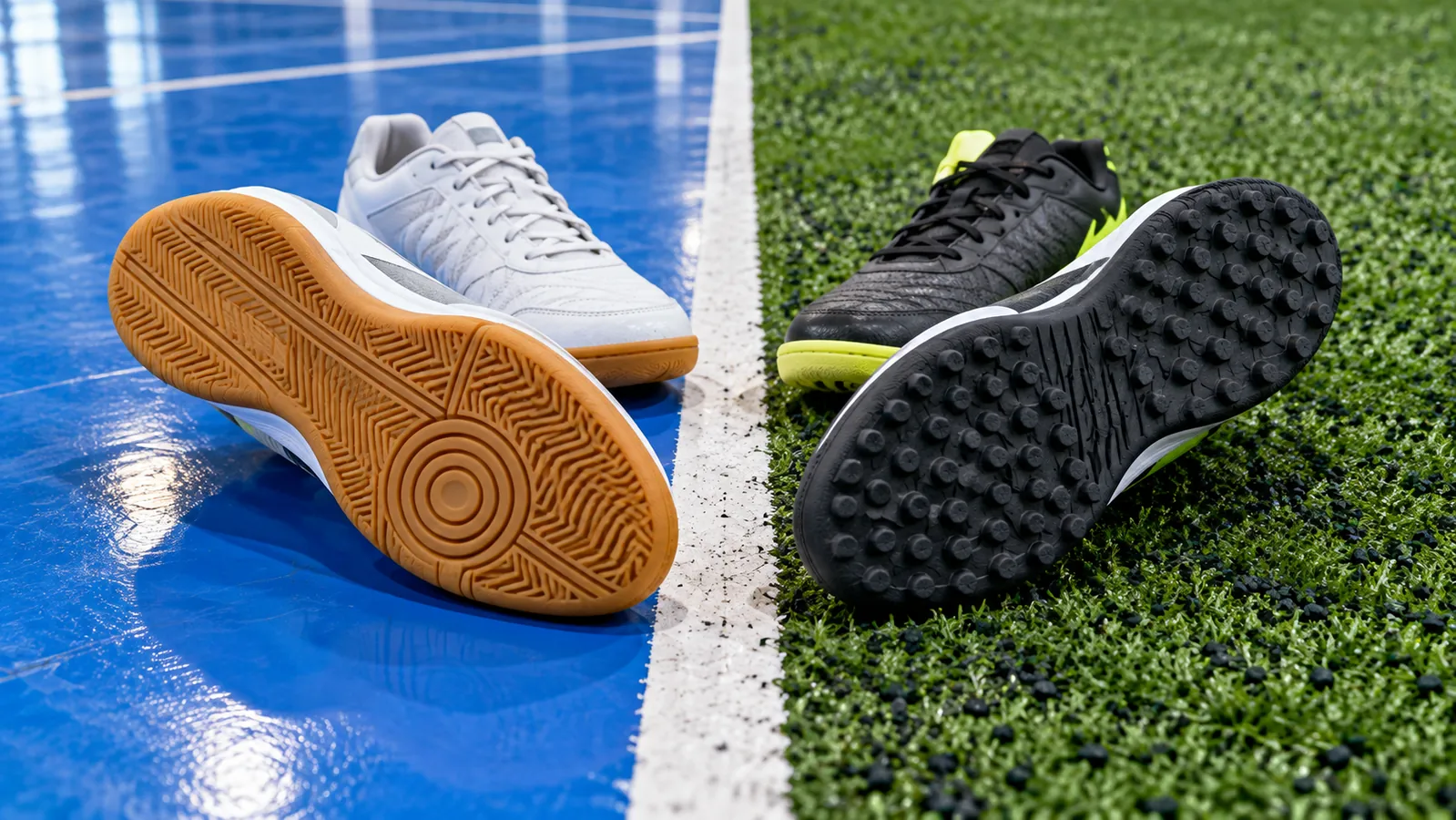
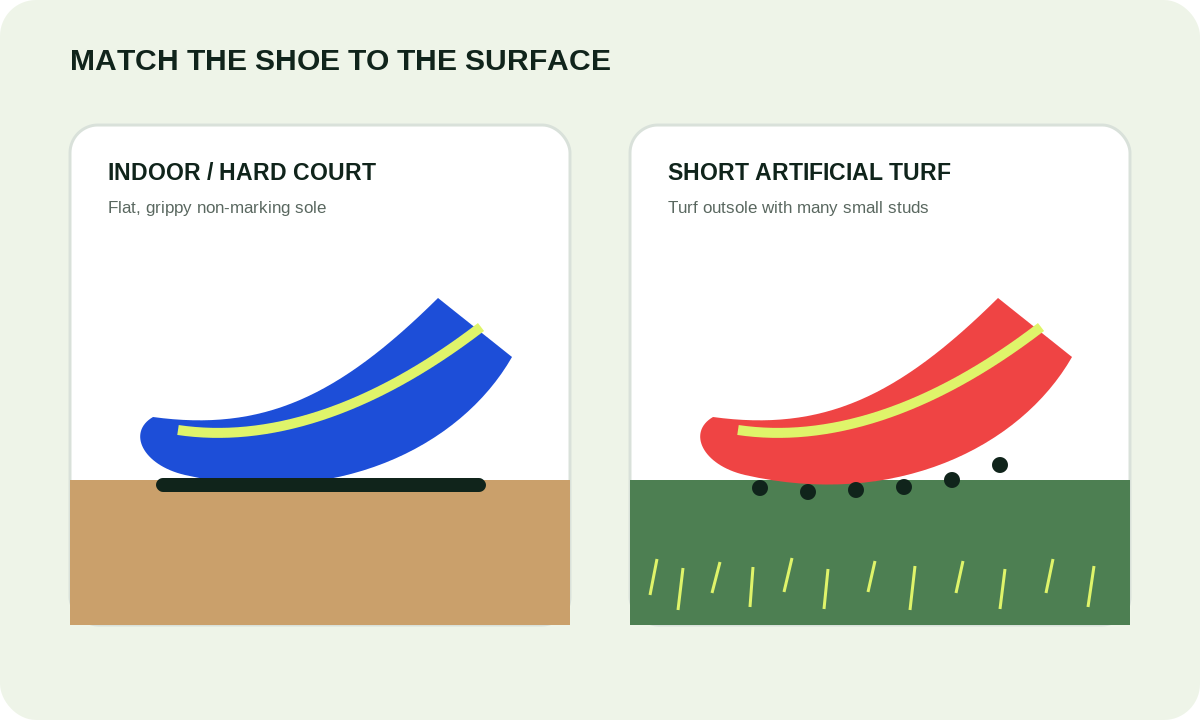
The word futsal does not guarantee one surface. Philippine opportunities in the Play Finder include gym floors, covered multi-purpose courts and turf. Choose footwear for the surface you will actually use, not only the sport name on the shoe box.
Wood or smooth indoor synthetic
Start with a flat, non-marking indoor-court outsole that provides lateral grip without studs. The exact compound and tread vary by shoe, but the important point is that the sole is designed for smooth hard-court movement.
Some school and sports halls have specific non-marking footwear rules. Confirm the venue policy before buying.
Covered concrete or hard multi-purpose courts
A durable flat court shoe is often the practical starting point. Grip, cushioning and outsole durability matter because painted or worn hard courts can behave differently from a purpose-built indoor sports floor.
If the court becomes dusty or damp, traction can change significantly. A shoe cannot compensate for an unsafe playing surface.
Artificial turf
Short artificial turf usually calls for turf-specific shoes with many small rubber lugs rather than a completely flat indoor sole. Firm-ground studs designed for full football pitches may be inappropriate for a compact short-pile surface.
Futsal rules and venue labels are sometimes used loosely around small-sided turf facilities, so ask what the surface actually is.
Indoor futsal shoes vs football boots
A product sold for “indoor court football” may be appropriate for smooth futsal surfaces even if the merchant uses football terminology. For example, Nike Philippines maintains an indoor-court football shoe category, while PUMA Philippines sells dedicated futsal-labelled footwear.
Those are editorial retailer examples, not tracked affiliate links. Availability and models change at the merchant.
A simple buying sequence
- Find the actual venue or program.
- Confirm the surface and any footwear restrictions.
- Decide whether you need flat indoor or turf traction.
- Prioritise fit and secure lateral support over cosmetic differences.
- Re-check the merchant's return/size policy before ordering.
For model specifications and fit decisions, use the equipment gear hub and indoor shoe comparison.
If you are new, buy only after you know your likely court. Open the Play Finder or review the basic equipment checklist.
Equipment next step
Shop futsal / indoor-court footwear
These retailer links are editorial and non-affiliate. Any tracked commercial relationship, if introduced, will be clearly disclosed.
Sources
Verified October 4, 2026 · Freshness: quarterly
- FIFA — Futsal surfaces quality programme (official)
- Philippine indoor-court football product category (manufacturer)
- PUMA Philippines — PRESSING futsal boots (manufacturer)